


Faced with overcrowded beaches at the height of summer, the Italian island is rolling out an ambitious strategy centered on authenticity, rural immersion, and off-season visits. This shift is being driven by the local agency To Our Sardinia, which aims to transform the summer tourist into an explorer of Sardinian identity.
Traveling differently
This phrase, which has become a true leitmotif in the post-pandemic tourism industry, resonates particularly strongly in the Mediterranean today. While Sardinia instantly conjures up images of white sands, turquoise waters, and yachts moored along the Costa Smeralda, the Italian island is quietly undergoing a revolution. Its goal? To break free from its exclusive reliance on the summer beach-holiday model and reveal a side of itself that is more secluded, rugged, and profoundly authentic.
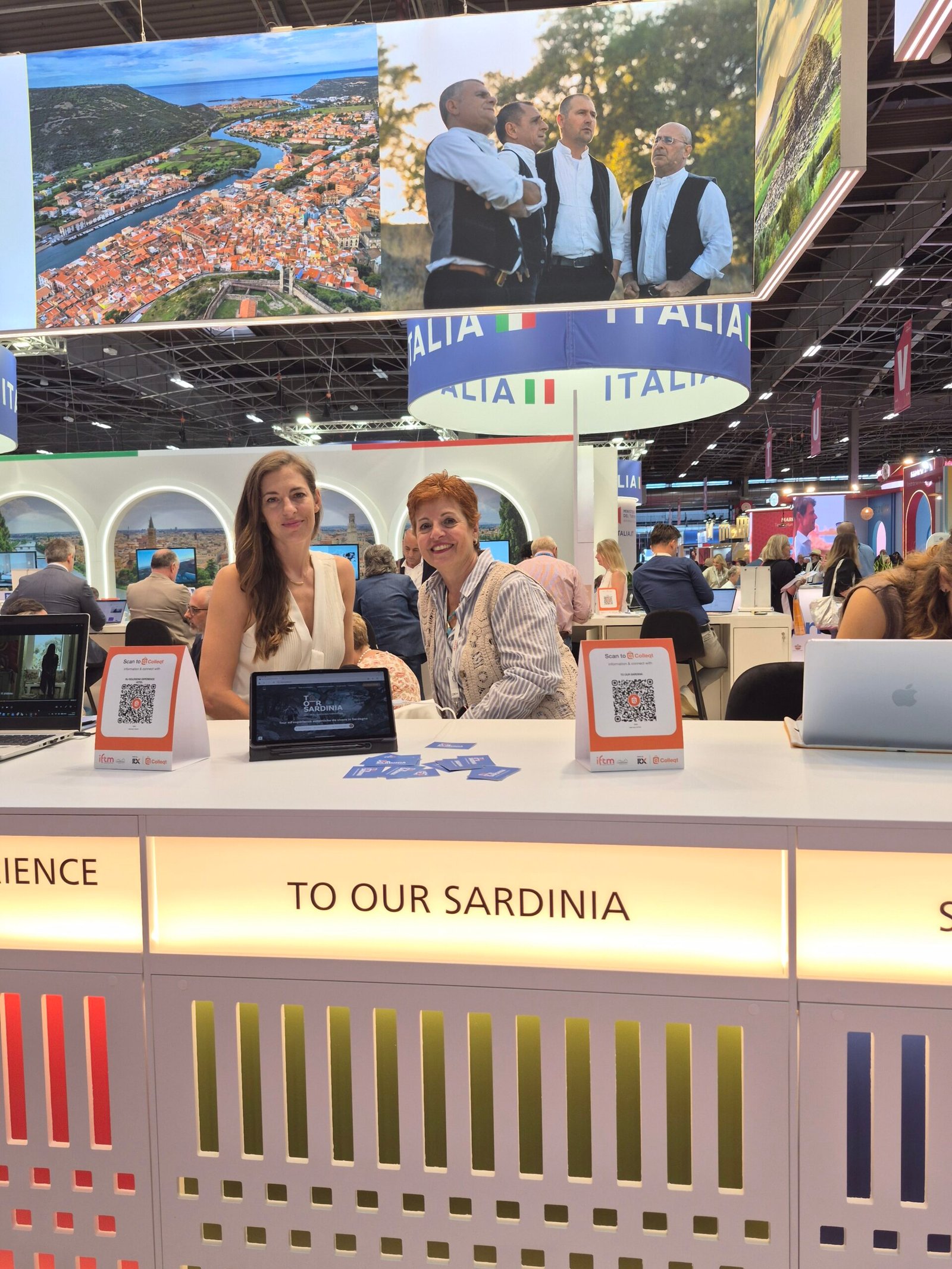
This new roadmap lies at the heart of the strategy adopted by local professionals like Ornella, a representative of the specialized agency To Our Sardinia. Speaking at a trade show, she makes no secret of her ambitions: to attract an increasingly discerning French clientele seeking meaning, a reconnection with nature, and a slower pace of life. To achieve this, the agency is focusing on tailor-made stays designed to break decisively with mass tourism.
Northwest Sardinia sets its sights on the French market
Sardinia and France share an obvious geographical proximity, evidenced by regular ferry links and the silhouette of neighboring Corsica, visible from the Strait of Bonifacio. Yet, the Sardinian hinterland remains largely unknown to French travelers. It is precisely this situation that the island’s tourism stakeholders aim to address, focusing primarily on developing the northwest coast and its inland areas.
“We are very keen to attract French tourists and would like to increase their presence in our region, particularly in northwest Sardinia,” explains the spokesperson. To appeal to this demographic known for its appreciation of gastronomy, hiking, and cultural heritage Sardinia is reinventing its tourism offering. The goal is no longer merely to sell a beach umbrella and a sunbed, but to propose itineraries where the sea serves merely as the starting or ending point of a much broader journey.
The hinterland: a sanctuary of unspoiled nature
Far from the coast and the bustle of seaside resorts lies the “real” Sardinia. It is a land of contrasts, defined by small rural communities, perched stone villages, and wild valleys where time seems to stand still. It is in this island heartland that the island’s true luxury resides: a completely unspoiled environment, far removed from frenetic urban development.
This inland Sardinia surprises visitors with its lush greenery and rugged terrain. The island is home to numerous natural parks where biodiversity reigns supreme. For industry professionals, the comparison with Corsica makes perfect sense here; the two islands share similar ecosystems, leading them to be dubbed “twin islands.” Crystal-clear rivers, hidden waterfalls, and small high-altitude lakes create striking landscapes that shatter the stereotype of Sardinia as a purely arid Mediterranean destination. Travelers venturing into this interior discover rugged vistas and an atmosphere that is deeply rejuvenating.
The paradox of the seasons: fleeing summer to embrace autumn
To fully appreciate this immersive experience, local experts offer a piece of advice that serves as a warning: avoid July and August. During peak season, the island suffers the consequences of overtourism. Beaches become overcrowded, prices soar, and the stifling heat makes active exploration difficult or even grueling particularly inland.
To Our Sardinia’s strategy therefore focuses on actively promoting the off-season. May and June, as well as the shoulder season months of September and October, are highlighted as the ideal times to discover the island. The autumn weather remains exceptionally pleasant; temperatures are mild, the sea has retained the summer’s warmth, and, above all, the crowds have gone.
“This is when the region truly shines. Travelers feel as though the place has been arranged almost exclusively for them,” notes Ornella. The ability to walk along vast beaches with not a soul in sight, while enjoying a spring or autumn breeze, has become the key selling point of this new approach.
Spiritual paths and thermal wellness: this year’s new offerings
To enhance its off-season offerings, the agency is launching a unique range of tourism products: spiritual and religious hiking trails. Traversing particularly rugged, unspoiled terrain, these routes allow hikers to follow in the footsteps of centuries-old traditions while immersing themselves in the silence of the mountains. It is an invitation to disconnect both digitally and mentally through a walking experience that is increasingly sought after by European city dwellers.
Alongside hiking, Sardinia aims to showcase its hydrothermal resources. While the island boasts hotels equipped with modern spas, it is particularly notable for its natural open-air thermal sites, found in both the north and the south. Nestled in the heart of nature, these hot springs offer visitors the chance to bathe in therapeutic waters while gazing out at the surrounding wild landscapes. This integrated wellness offering further strengthens the appeal of visiting during the autumn and spring seasons.
Gastronomy and human connection: the art of living at the Sardinian pace
The Sardinian “slow tourism” initiative would be incomplete without its human and heritage dimensions. Craftsmanship and cuisine lie at the heart of the island’s identity. Rather than simply consuming dishes in tourist-oriented restaurants, travelers are invited to take an active role in preparing meals.
Participatory cooking workshops are organized in the villages, where visitors learn to prepare age-old recipes under the guidance of local women the true guardians of the island’s culinary traditions. This sharing of knowledge is rooted in a specific philosophy: one that values taking one’s time, intergenerational exchange, and genuine conviviality.
Among the treasures of the local table, bread stands out as a true institution so much so that it eclipses the famous French baguette in culinary conversations. Sardinia boasts over 500 varieties of traditional bread. The most iconic is undoubtedly pane Carasau. This ancient bread exceptionally thin and crisp was once prepared for shepherds embarking on months-long transhumance journeys. The island also produces tall, round, and incredibly soft loaves that are used in a surprising way: they are hollowed out to serve as edible vessels for the thick, traditional soups of the hinterland.
Towards sustainable and respectful tourism
By shifting tourist flows across time (to the off-season) and space (to the island’s interior), Sardinia is shaping a more sustainable development model. This approach not only relieves pressure on fragile coastal ecosystems during the summer but also injects vital economic momentum into small inland villages often affected by depopulation.
For French travelers, this hidden side of Sardinia promises a complete change of scenery, just a few hours away by plane or ferry. It offers an intimate, human-scale experience, where the journey is measured by the quality of encounters, the beauty of mountain silences, and the taste of a piece of pane Carasau shared at sunset.
Useful Links :