


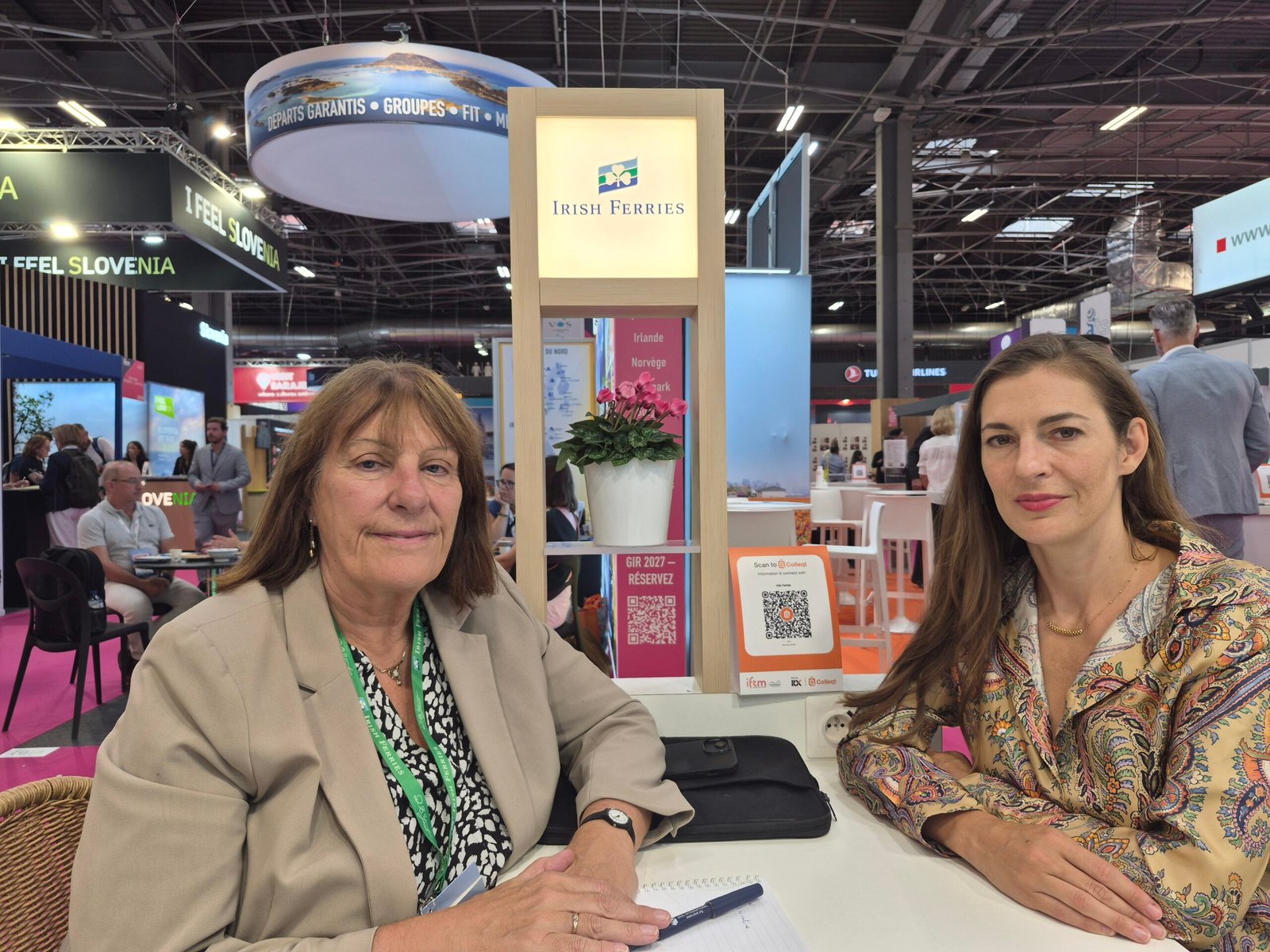
Between Ireland, France, and the United Kingdom, steel titans relentlessly cross the tumultuous waters of the Atlantic and the Irish Sea. A major feature by Discovery Edition TV Mag takes us deep inside Irish Ferries—the company orchestrating this high-flying ballet of logistics and tourism. Welcome aboard the true “motorways of the sea,” where the raw grit of industrial transport meets the absolute refinement of modern cruising.
The horizon is an ink-grey sheet, typical of the North Atlantic. In the distance, a massive silhouette emerges through the mist, cutting through the waves with metronomic regularity. To the untrained eye, it is just another ferry connecting two pieces of European land. But for economists, truck drivers, and tourism professionals, it is a vital artery.
In an era where global supply chains are measured down to the exact minute, Ireland—an island nation—viscerally depends on its maritime connections. At the very center of this strategic network, the giant vessels of Irish Ferries play a leading role. This exclusive documentary lifts the veil on the precision-engineered organization, the daily lives of the crews, and the bold gamble behind these hybrid ships, which are capable of carrying thousands of tons of freight while offering amenities worthy of a four-star hotel.
More Than a Ferry: The Rise of the “Mini-Cruise”
For decades, taking the ferry to Ireland felt like a test of endurance: cold lounges, faux-leather benches, the omnipresent thrum of heavy engines, and dining options reduced to the bare minimum. Those days are long gone. To capture an increasingly demanding tourist demographic and provide well-deserved rest for long-haul truck drivers, Irish Ferries has radically transformed its commercial and architectural philosophy by introducing the concept of the “mini-cruise ship.”
The moment you step through the access doors from the car decks, the change in atmosphere is immediate. The smell of fuel gives way to plush, quiet spaces. The designers of these ships have focused entirely on the guest experience, with the clear ambition of making the holiday feel like it begins the moment you step on board.
A Table for Every Appetite
On board these marine giants, the culinary experience serves as the foundation of passenger comfort. The hospitality infrastructure easily rivals that of major cities. Passengers have access to:
- À la Carte Restaurants: Fine dining spaces where local ingredients—particularly Irish meats and seafood—take center stage for travelers looking for a refined dinner on the high seas.
- Family Buffets: High-capacity, self-service dining concepts designed for speed and convenience, making them highly popular with families and large groups.
- Cafés and Quick Bites: Perfect for a late-night snack or a quick breakfast on the go just before docking.
The Culture of High-Seas Entertainment
To keep passengers engaged during long-haul crossings—such as the direct routes between France and Ireland, which can take nearly twenty hours—the public areas have been transformed into genuine entertainment hubs. Moving far beyond the simple television lounges of the past, the main lounges now host a diverse lineup of talent. Magic shows, live musicians, and entertainers perform back-to-back to keep both adults and children entertained, giving the crossing a very distinct atmosphere suspended between sky and sea.
This metamorphosis also addresses a psychological need: by keeping passengers entertained, the crew helps ease any potential anxiety associated with open-ocean navigation, particularly during stormy nights on the Celtic Sea.
The Art of Flexibility: Unconstrained Travel
The true competitive advantage of these marine highways remains the absolute freedom they offer travelers. Unlike air travel, which is bound by strict luggage limits, exhausting security lines, and the inevitable need to rent a vehicle upon arrival, a ferry crossing offers total flexibility.
Passengers roll aboard with their own cars, campervans, pets, or heavy sports equipment (such as bicycles, surfboards, or golf clubs) without facing prohibitive extra fees. It is the preferred mode of transport for the road-tripper a rapidly growing trend among tourists eager to explore the rugged, wild landscapes of the Irish west coast. The decks dedicated to light passenger vehicles are engineered to guarantee a smooth loading process, protecting travelers’ property from the ship’s movements with professional-grade lashing systems.
Behind the Curtain: Industrial Machinery with Military Precision
While a vacationer might only remember sipping a cocktail against a beautiful sunset or enjoying a peaceful night’s rest in their cabin, the view behind the curtain reveals a much rawer reality. Behind the seamless hospitality sits a relentless industrial machine where every lost minute translates directly into thousands of euros.
The ships in this fleet represent staggering capital investments. To remain profitable, they must spend as little time as possible at the dock. The entire concept of a marine highway relies on continuous rotation.
The Race Against the Clock
The moment an Irish Ferries giant glides into the port of Dublin, Cherbourg, or Holyhead, a frantic countdown begins. In less than two hours, land crews and shipboard personnel must accomplish a logistical miracle:
- Disembarkation: Orderly evacuation of kilometers of vehicle lanes, safely separating heavy freight traffic from civilian tourist cars.
- Express Turnaround: Deep cleaning and resetting hundreds of cabins, changing bed linens, emptying bins, and sanitizing bathrooms. An army of housekeeping staff floods the corridors the second the last passenger leaves.
- Replenishment: Loading tons of food, beverages, and fresh water for the upcoming crossing, while simultaneously offloading waste gathered from the previous journey.
- Refueling: Filling the fuel tanks of these massive vessels, whose fuel consumption is measured in tons per hour.
- Boarding: Introducing the next wave of cargo and vehicles, balancing the weight across the garage decks under the strict supervision of deck officers to guarantee optimal stability at sea.
This choreography, repeated multiple times a day, requires military-grade discipline. The slightest disruption—a broken-down truck on the ramp, an IT glitch, or a late passenger—can push back departure times and compromise downstream connections
Freight: The Invisible Economic Heartbeat
While corporate marketing heavily highlights happy families enjoying the open air on the top decks, the true financial engine driving these maritime routes is commercial road freight. The lower decks of these vessels are gargantuan rolling warehouses, capable of lining up dozens of semi-trucks bumper-to-bumper.
Ireland heavily exports its agricultural, pharmaceutical, and technological products directly to the European mainland, and imports an equal volume of manufactured goods. For transport companies, Irish Ferries offers a literal extension of the highway. While the ship cuts through the water, the driver gets mandatory rest in dedicated crew spaces (including driver lounges and private cabins), allowing companies to comply with European driving hour regulations without stopping the physical flow of goods.
Following recent geopolitical shifts in the region, particularly the customs complexities brought about by Brexit, direct routes bypassing the UK landbridge (such as the Cherbourg-Dublin line) have experienced unprecedented growth. This has effectively transformed these maritime lanes into economic shields for the Emerald Isle.
Confronting the Elements: The Human and Technical Challenge
Navigating the Irish Sea or crossing the English Channel is no easy feat. These maritime regions are notorious for their highly volatile, sometimes ferocious weather conditions. Captains and their crews must constantly contend with violent winds, treacherous currents, and cross-seas capable of testing even the strongest stomachs and structural framing.
To minimize the impact of waves on passenger comfort and cargo safety, Irish Ferries’ ships are outfitted with cutting-edge technology, most notably anti-roll stabilizers. These massive retractable fins, deployed beneath the waterline, act much like aircraft wings to counter the ship’s natural swaying motion. Yet, despite this high-tech assistance, the human element remains paramount. The captain’s ultimate decision-making, weather routing managed from shore, and the constant vigilance of the crew on watch remain the true guardians of a safe crossing.
A Blueprint for the Future of European Transport?
At a time when Europe is actively seeking to decarbonize its transport sector and relieve congestion on oversaturated highway networks, the “motorway of the sea” model feels more relevant than ever. A single high-capacity ferry can remove several hundred trucks from continental roads across thousands of kilometers, organically reducing wear on land infrastructure and centralizing carbon emissions.
Irish Ferries continues to invest heavily in modernizing its fleet, integrating cleaner technologies, advanced exhaust gas cleaning systems, and researching alternative fuels for the decades ahead.
This deep dive reminds us brilliantly that behind the simple act of driving onto a ship for a holiday lies one of the most complex, physically demanding, and indispensable industries on our continent. These ocean giants don’t just connect ports—day after day, they weave the unbreakable bond that hitches Ireland to the rest of the world.
Useful Links :