



From the arid plains of the Atacama Desert to the eternal ice fields of Patagonia, a journey to the heart of an exceptional destination that has established itself as the world’s sanctuary for stargazing and tailor-made adventure.
At the crossroads of impossible geographies, where the Andes Mountains plunge into the tumultuous waters of the Pacific Ocean, stretches a strip of land unique in the world. Chile. Measuring over 4,300 kilometers in length but with an average width of no more than 180 kilometers, this South American nation is not merely a tourist destination; it is a permanent challenge to the imagination, a living anthology of our planet’s climates and terrains. Recently highlighted at international tourism exhibitions by passionate experts, Chile stands out today as the essential choice for travelers seeking meaning, wide-open spaces, and untouched purity.
To truly understand Chile, one must be willing to let go of familiar reference points. It offers a total immersion into a territory of absolute contrasts, capable of transporting you within a few hours of flight from the driest desert on earth to the massive glaciers of the extreme south, passing through fertile valleys where some of the world’s most renowned wine grapes ripen. Yet, beyond its spectacular geography, the country is undergoing a quiet revolution: that of astrotourism and tailor-made travel, redefining luxury no longer by opulence, but by the exclusivity of the experience and the preservation of nature.
The Atacama Desert: A Mirror to the Universe
Our journey begins in the far north, where the earth seems to have a rendezvous with the cosmos. The Atacama Desert is a mystical expanse of cracked earth, snow-capped volcanoes, and salt lagoons with ethereal colors. Here, at thousands of meters of altitude, the theater of the infinitely large unfolds. The statistics are absolute: Atacama enjoys the clearest and most pristine skies on Earth, boasting more than 300 completely cloudless nights per year. The near-total absence of humidity and non-existent light pollution make it the absolute sanctuary for global astronomy.
It is no coincidence that the world’s largest scientific institutions have installed their technological eyes in this vast emptiness. In the heart of this expanse, the Paranal site, located near Antofagasta, houses the Very Large Telescope (VLT), while the Chajnantor plateau hosts the ALMA project, a revolutionary network of 66 giant antennas that peer into the secrets of the universe’s creation. These titans of science are no longer the exclusive domain of researchers in lab coats. Today, a genuine culture of popular science education has developed.
Travelers from all over the world, particularly a growing number of European and French visitors, journey there not only for the daytime scenery but to live the experience of a night beneath the Milky Way. Accompanied by astronomer guides, general knowledge enthusiasts and astrophotography buffs discover the structure of the southern hemisphere constellations, which are invisible from Europe. Observing Saturn or distant nebulae through state-of-the-art telescopes, in the midst of absolute desert silence, evokes an emotion that few other places can match.
Yet, Atacama does not sleep during the day far from it. Around the oasis village of San Pedro de Atacama, the true base camp for the region, the landscapes transform with every hour. The Moon Valley (Valle de la Luna) offers geological panoramas reminiscent of the lunar surface, igniting with shades of red and purple at sunset. Further away, the El Tatio geysers awaken at dawn in plumes of boiling water and steam, creating an atmosphere from another time, while the salt flats stretch as far as the eye can see, inhabited by colonies of pink flamingos that contrast vividly against the white salt.
From Wine Valleys to Volcanic Peaks: The Vibrant Heart of Chile
Traveling down toward the center of the country, the climate softens, giving way to a generous and hospitable nature. This is where the economic and cultural heart of Chile beats, around its capital, Santiago. Nestled at the foot of the majestic Andean barrier, this modern metropolis serves as a gateway to the wine valleys that are the pride of the nation.
Chilean wine is now an essential benchmark on international tables. From the Casablanca, Colchagua, or Maipo valleys come nectars of great complexity, driven by iconic grape varieties such as Carmenère an old Bordeaux grape that disappeared from Europe during the phylloxera crisis and found its ideal terroir in Chile. Wine tourism has developed here with rare refinement. The estates or bodegas compete in architectural boldness, blending raw concrete, glass, and precious wood, while offering sensory tours, gourmet dining, and stays in the heart of the vineyards. It is a peaceful stopover of tasting and relaxation, essential for understanding the Chilean art of living.
A few hours’ drive south is all it takes to change worlds once again and enter the Region of Lakes and Volcanoes. Here, water is king. Ancient araucaria forests surround emerald-blue lakes, dominated by perfect, snow-coned volcanoes like Osorno or Villarrica. This region is a paradise for outdoor activities: hiking, river kayaking, rafting, or thermal spring relaxation in facilities seamlessly integrated into nature. It is a land steeped in the history of the indigenous Mapuche people, but also in the waves of 19th-century German immigration, whose wooden architecture and culinary traditions can still be seen in coastal towns like Puerto Varas
Patagonia and Easter Island: The Edges of the Myth
For many, however, a trip to Chile finds its climax in its two most wild and mysterious extremes: Patagonia to the south, and Easter Island out in the Pacific.
Chilean Patagonia is a land of superlatives, an ultimate frontier where nature expresses itself with raw force. Torres del Paine National Park is the jewel in this crown of ice and rock. Its vertical granite towers, rising above wind-swept steppes and turquoise glacial lakes, draw hikers from across the globe. Navigating through the fjords, approaching the blue walls of the Grey Glacier, or watching condors soar over the mountain massifs is an experience that permanently marks a traveler’s mind. It is a demanding territory, but its wild beauty provides a sense of total isolation and freedom, far removed from the hustle of the modern world.
Conversely, some 3,700 kilometers off the Chilean coast, isolated in the vastness of the ocean, lies Rapa Nui, better known as Easter Island. This tiny dot on the world map holds one of humanity’s greatest mysteries. Its famous stone statues, the Moai, erected along the coastline, have puzzled travelers for centuries. Visiting Easter Island means touching a unique Polynesian culture preserved by isolation, where spirituality and traditions remain vibrant. Between the craters of extinct volcanoes and white-sand beaches lined with palm trees, the island offers a mystical and cultural dimension that is indispensable to appreciating the complexity of Chilean identity.
The Art of Tailor-Made Travel: Safety and Adaptation
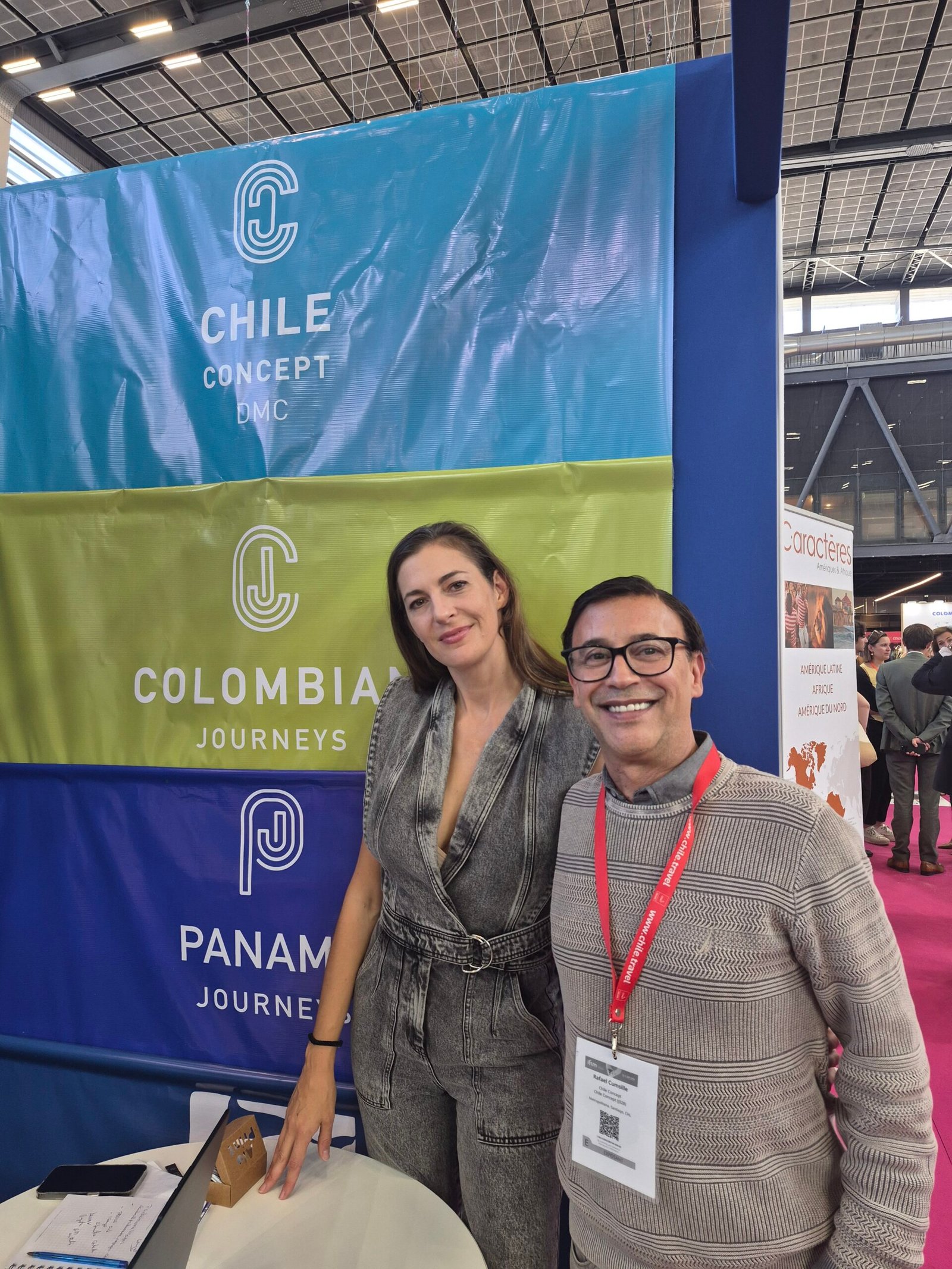
Faced with such geographical diversity, the era of rigid, standardized tour packages is over. Modern Chile is best explored “à la carte.” Specialized agencies, like Chile Concept, have made it their mission to sculpt custom itineraries tailored to the aspirations of every traveler profile.
One of the country’s greatest assets lies in its high standard of safety and infrastructure. Chile is consistently ranked among the safest and most stable countries in Latin America. This peace of mind makes it a top destination for family travel, even with young children. Chileans hold a deep respect and affection for the youngest travelers, giving family stays a warm and welcoming atmosphere.
In the same way, whether you are planning a romantic honeymoon in an Atacama eco-lodge, an adventurous road trip with friends along the mythical Carretera Austral, or a group trip centered on a specific theme like photography or geology, the country adapts. The hospitality infrastructure, ranging from charming wilderness lodges to luxury eco-resorts, along with domestic transport networks and locally trained multilingual guides, allows for total flexibility.
A Call to Wonder
Chile does not just show you a new country; it transforms you. By placing the preservation of its skies and national parks at the center of its model, it leads the way for the future of respectful, deeply immersive tourism. At a time when travelers seek to move away from mass tourism to reconnect authentically with the elements, this slender nation offers a brilliant answer.
Following the updates of specialists, drawing inspiration from tailor-made itineraries, and daring to step toward this distant horizon guarantees a memorable journey. From the depths of space observed from Atacama to the ends of the Earth explored in Patagonia, Chile awaits you. Let yourself be captivated by the call of absolute contrasts, because true adventure begins where the earth ends.
Useful Links :