



Moving away from mega-ships and mass tourism, a new boutique approach is emerging. Between Hellenic heritage, extended port stays, and green transitions, an immersive look at the human-sized vessels giving time back to travelers.
The sun dips slowly toward the horizon, bathing the whitewashed facades of Mykonos in a golden, almost surreal light. At this late hour, while the massive silhouettes of mega-cruise ships are already vanishing into the open sea, one vessel remains stationary, anchored just off the port. On board, there is no rush, no frantic race to catch the last 6:00 PM tender. Passengers are savoring an ouzo on the terrace, rocked by the gentle Aegean breeze, before getting ready to head ashore for dinner at a local waterfront tavern. This luxury of time recaptured is the ultimate promise of the “slow travel” philosophy applied to the sea. It is a return to roots that is disrupting the codes of an industry frequently criticized for its frantic pace and over-tourism.
The Greek DNA: Authenticity as a Compass
To understand this approach, one must look at the roots of the operation. In a global market dominated by massive international conglomerates, certain cruise lines proudly showcase their deep regional heritage. Celestyal Cruises is a prime example—a company whose flag and heart beat to the rhythm of Athens. Here, Greece is not just a marketing concept printed on a glossy brochure; it is a profound identity, a treasure trove of insider secrets passed down to the traveler.
Sailing on a ship deeply rooted in its own culture radically transforms the onboard experience. The crew, drawn from international backgrounds but thoroughly trained in traditional Mediterranean hospitality, moves away from standardized, rigid corporate service. Instead, they cultivate a genuine sense of local welcome.
This authenticity is most powerfully felt on the plate. The onboard gastronomy rejects the uniform, bland offerings of multinational buffets. While international cuisine maintains a presence to satisfy all palates, it is the local culinary variations that truly elevate the dining rooms. Sun-drenched Kalamata olives, authentic feta cheese, fresh fish drizzled with local olive oil, and aromatic dishes influenced by Eastern spices serve as constant reminders that the Mediterranean has been a crossroads of civilizations for millennia. This is narrative cooking: it tells the story of the ports visited, the craftsmanship of local producers, and the richness of a unique terroir.
The Luxury of the Extended Port Stay
The true revolution in modern travel is no longer found in material comfort which has largely become democratized but in the management of time. The magic formula boils down to two words: extended stays.
Most traditional cruise operators consume destinations at a frantic pace: a handful of hours per island, just long enough for a quick photo, the purchase of a generic souvenir, and it is already time to weigh anchor. The “boutique hotel” approach on the water flips this logic on its head. By guaranteeing full-day port stays that extend late into the night, the very nature of the journey changes.
This strategic choice fundamentally alters the relationship between the traveler and the destination. Having twelve to sixteen hours at a berth allows guests to break free from the constraints of rigid, minute-by-minute excursions. Travelers finally have the time to get lost in cobblestone alleyways, sit at a café terrace to observe the daily life of the residents, walk to a secluded beach, or explore an archaeological site without constantly checking their watches. This freedom fosters genuine interactions with locals, far away from congested tourist corridors. It is a respectful form of immersion that also directly supports the local economy, as passengers spend their evening dining and shopping in the island’s independent businesses.
When Sea Giants Give Way to Human Scale
To offer this level of flexibility, choosing the right vessel size is critical. It is physically impossible to maneuver a ship carrying 6,000 passengers into the picturesque, shallow harbors of the Cyclades or along the rugged, historic coastlines of the Western Mediterranean. This is exactly where the concept of a “human-scale” ship reveals its true value.
These mid-sized vessels strike a delicate balance: they are large enough to offer all modern comforts—such as wellness spas, lounges, diverse entertainment, and specialized restaurants—yet intimate enough to eliminate the crowd anxiety and anonymity associated with floating mega-cities. Onboard movement is fluid, embarkation and disembarkation require no endless queues, and a warm, convivial atmosphere naturally develops among the passengers.
Furthermore, these dimensions allow captains to chart exclusive itineraries. The ship becomes a gateway capable of slipping into destinations where others are forced to sail past, offering passengers unspoiled panoramas and direct access to the historical hearts of maritime cities.
The Green Imperative: Navigating Ecological Responsibility
It is impossible to discuss the modern maritime industry without directly addressing the environmental question. The cruise sector faces an existential challenge: it must drastically reduce its carbon footprint or face progressive exclusion from the world’s most pristine ports.
In this arena, the transition is actively underway, spearheaded by a new generation of vessels. The integration of green technologies is rapidly becoming the baseline standard for preserving fragile marine ecosystems. Strict onboard waste sorting, the aggressive reduction of single-use plastics, and highly optimized water management systems are now basic requirements.
However, the real heart of the battle is fought down in the engine room. Fleet renewals are introducing cutting-edge innovations, as demonstrated by the Celestyal Discovery, a modern unit specifically engineered to run on specialized fuels designed to significantly lower greenhouse gas emissions. These technical advancements are part of a global awakening: the travel of tomorrow will either be eco-responsible or it will cease to exist. Preserving the natural beauty of the visited environments has become the primary duty of maritime operators.
From the Aegean to the Pillars of Hercules: Expanding West
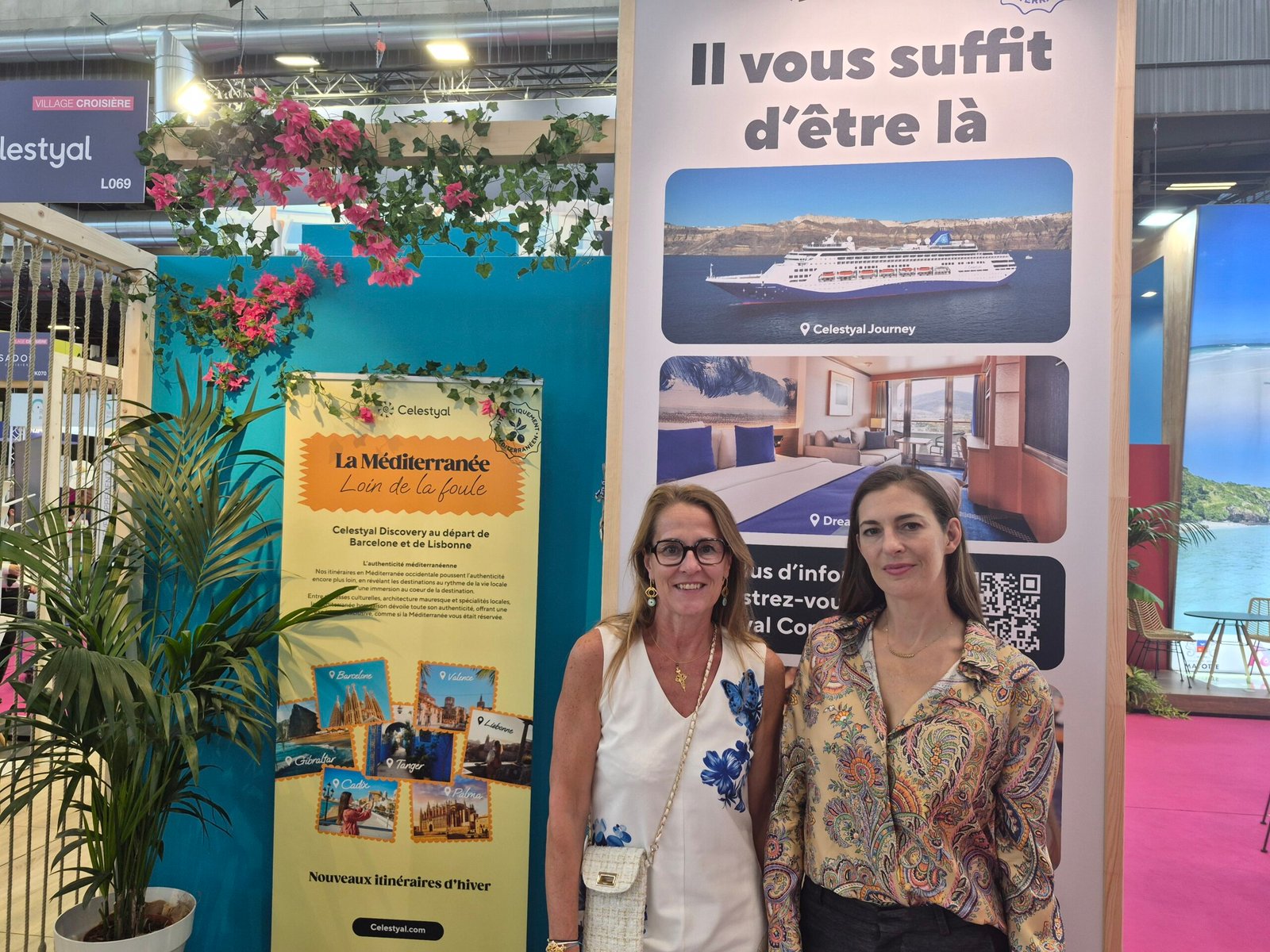
While the Aegean Sea remains the historical cradle of this charming style of navigation, horizons are expanding. The major trend for upcoming seasons is the bold move into the Western Mediterranean during the winter months a season that has long been neglected by premium cruise lines.
Starting in December, new itineraries completely redraw the winter travel map. By establishing strategic homeports like Barcelona and Tarragona, ships set out on fascinating loops connecting Spain, Portugal, and Morocco. Imagine waking up to the rolling hills of Lisbon, spending a day exploring the bustling, vibrant souks of Tangier, or enjoying an extended stay along the sun-warmed coasts of Andalusia.
These winter voyages, available in highly flexible formats of 7, 14, or even 22 nights made possible by combining regional itineraries with the repositioning cruises that link Athens to Catalonia offer a rare depth of cultural diversity. Moving from Latin Europe to the gateways of the Moroccan desert in just a few days of sailing, all while enjoying the mild winter climate of the continent’s southern edge, appeals directly to seasoned long-haul travelers seeking meaningful exploration.
The Epic Three-Continents Travel
For lovers of deep history and geography, maritime ambition goes even further. Eyes are already turning toward future horizons with the programming of exceptional crossings dubbed the “Three Continents” voyages. Operated by flagship units like the Celestyal Journey, these rare itineraries link Europe, Asia, and Africa in a single, grand odyssey.
This legendary route takes passengers from the ruins of ancient Greece to the shores of Turkey featuring an extended stay in the vibrant, timeless metropolis of Istanbul before setting sail for North Africa. The crown jewel of this journey is undoubtedly Egypt. By scheduling a major port stay in Alexandria that includes a full overnight stop, the cruise effectively transforms into an in-depth overland expedition. This night at the pier opens the door to Cairo and the Pyramids of Giza, giving travelers the vital time required to absorb the mysteries of the pharaohs without the stress of a hurried return to the ship. It stands as a perfect illustration of a cruise designed entirely as an instrument of cultural discovery.
Intergenerational Travel: History Brought to Life
Contrary to outdated stereotypes, this style of cruise focused closely on education, culture, and deep discovery is not reserved exclusively for retirees or solo travelers. It has become a magnificent platform for intergenerational bonding and shared experiences.
Introducing children or teenagers to the Mediterranean aboard these mid-sized vessels is equivalent to opening the pages of a live history book. Visiting the Minoan Palace of Knossos in Crete, walking in the footsteps of ancient philosophers in Athens, or discovering the intricate Moorish architecture of Andalusia turns a standard family vacation into an engaging educational adventure.
To appeal to modern families, operational flexibility is key. Pricing policies are deliberately structured to help, offering complimentary stays or highly reduced rates for children up to 11 years old when sharing a cabin with their parents. On board, the balance is finely tuned: professional entertainment teams host creative and culturally light activities throughout the day, and a mini-disco gives younger guests a space to socialize in the evening. Yet, a sterile “daycare” mentality is completely avoided. The ship encourages shared family experiences, leaving parents as the co-explorers of their children’s journey, while still allowing adults the quiet moments of relaxation they need.
The Horizon of Tomorrow’s Traveler
Ultimately, this profound evolution of the cruise landscape sketches the clear contours of tomorrow’s tourism. In an era marked by destination overcrowding and a growing quest for authenticity among global travelers, mid-sized ships offering extended port stays represent the future of sustainable exploration. They prove that it is entirely possible to explore the world with curiosity, respect, and elegance.
As the ship finally glides out of the port of Mykonos in the middle of the night, the island’s twinkling lights slowly fade into the wake. The passengers, enriched by the day’s encounters and the authentic flavors they have shared, sleep soundly, knowing that tomorrow will bring a brand-new page of history written at the slow, majestic, and timeless rhythm of the sea.
Useful Links :